Nail Fungus Treatment Options: Compare Evidence, Safety and Practical Fit
There is no single universal winner. Compare diagnosis, disease extent, prescription options, procedures and consumer topical products by the evidence that applies to each.
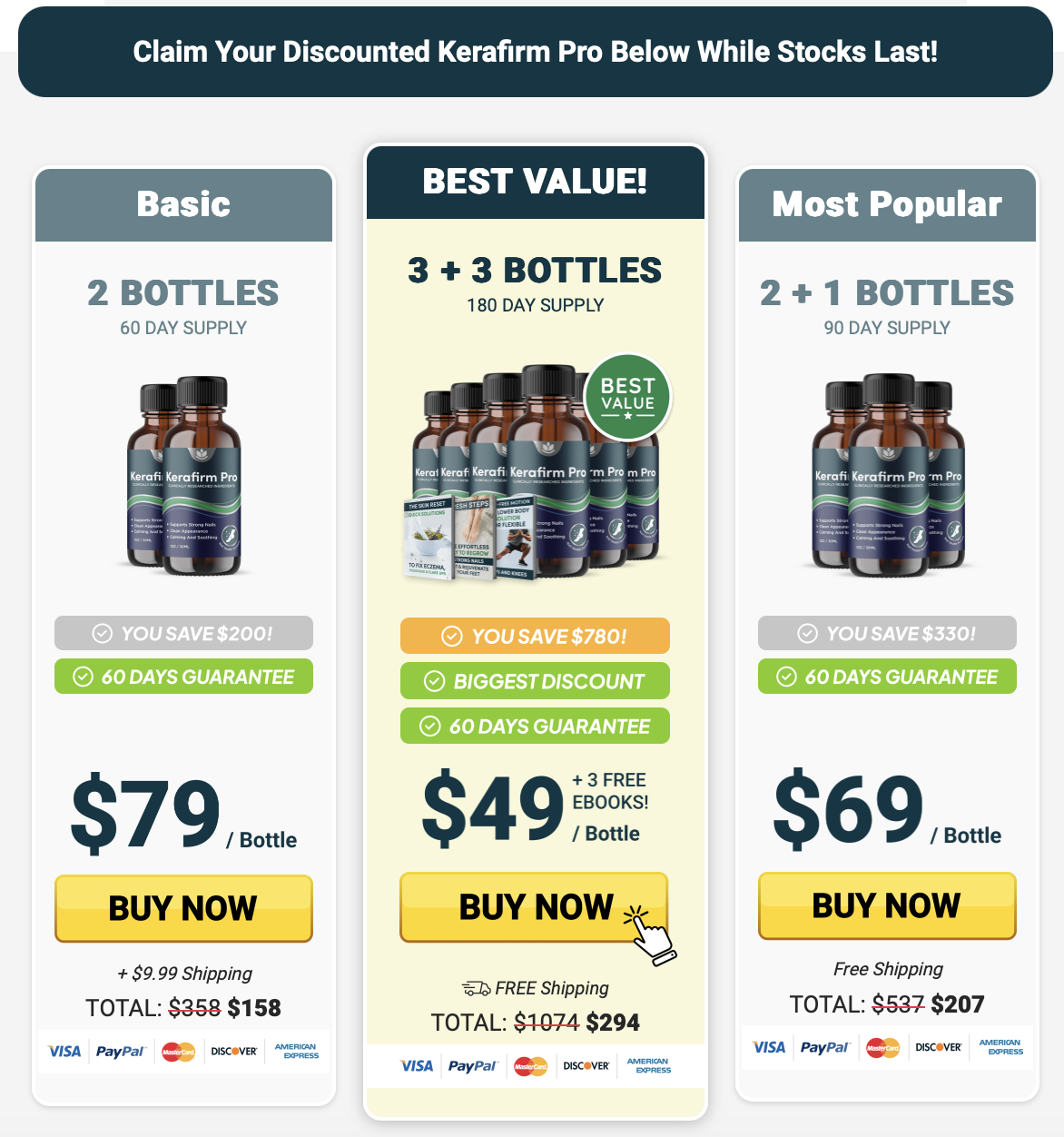
Compare KeraFirm Pro Packages Separately From the Clinical Evidence
Commercial terms can change. Check the merchant page for current pricing, shipping and guarantee details.
Check Current OfferDo Not Merge Medical Treatment Evidence With Consumer Product Marketing
Clinical treatment evidence
Prescription medicines and procedures should be evaluated using clinical guidance and intervention-specific studies.
Ingredient evidence
Research on a single oil, extract or antifungal ingredient may not predict the result of a multi-ingredient formula.
Finished-product evidence
KeraFirm Pro needs its own finished-product evidence for efficacy claims; merchant positioning alone is not clinical proof.
Start with confirmation, not product ranking
Several nail disorders can look fungal. AAD specifically recommends confirming fungal infection before oral antifungal therapy because treating the wrong condition exposes a patient to risk without addressing the real problem.
Oral antifungals
Oral antifungal medicines are a clinician-directed option when more aggressive treatment is needed. They can have systemic risks and interactions, so suitability depends on medical history, other medicines and monitoring.
Prescription topical treatment
Topical antifungal medicines avoid systemic exposure but often require long, disciplined use. Thick nail and extensive disease can reduce how well medicine reaches the target.
Procedures and laser-based approaches
Debridement can reduce nail thickness and may support topical treatment. Laser treatment is marketed heavily, but AAD notes that lasers are not FDA approved to treat the infection itself and that stronger trials are still needed.
Home remedies and consumer products
Tea tree oil and mentholated ointment have limited human data; vinegar lacks strong clinical evidence in the sources reviewed here. KeraFirm Pro should be evaluated as its own consumer topical formula. Ingredient evidence, merchant terms and finished-product evidence should not be blended together.
A practical comparison framework
Compare the certainty of diagnosis, amount of nail affected, medical risks, expected adherence, treatment duration, cost, need for monitoring and strength of evidence for the exact intervention. The best fit can differ from person to person, so this page does not rank one treatment as universally best.
Continue Through the Treatment Research Path
Commercial KeraFirm Site
Price, packages, guarantee, shipping and purchase-route information.
Open buying guide →Sources Used for This Guide
- American Academy of Dermatology: diagnosis and treatment
- NHS: fungal nail infection
- NCCIH: tea tree oil
Source interpretation is intervention-specific. A study or guideline about one medicine, oil, device or procedure should not be treated as evidence for a different finished product.
Questions to Resolve Before Choosing a Treatment
Should I confirm the diagnosis before treatment?
Yes, especially before systemic treatment or when the nail appearance could have another cause. Several non-fungal nail disorders can look similar.
Does ingredient research prove KeraFirm Pro works?
No. Ingredient studies provide context but do not automatically establish efficacy for the finished multi-ingredient product.
Where can I review KeraFirm Pro price and packages?
Use en-kera-firm.com for the commercial buying guide or open the merchant offer directly.
Where can I find evidence and catalog context?
Use the MPS KeraFirm Pro review for evidence interpretation and MenPS for structured catalog information.
Research First, Then Compare the Current KeraFirm Pro Offer
Keep treatment evidence, ingredient evidence and merchant claims separate, then review current commercial terms before ordering.
Check Current Offer Open Buying Guide